
Modern metro rail systems are the backbone of urban transportation, carrying millions of passengers daily. With such high volumes and complex operations, incidents—ranging from minor technical glitches to major emergencies—are inevitable. Effective incident management is therefore critical to ensure passenger safety, minimize service disruptions, and maintain public trust.
Incident Management in Metro Rail Systems: Ensuring Safety, Efficiency, and Reliability
What is Incident Management in Metro Rail?
Incident management in metro rail refers to a structured process for identifying, responding to, resolving, and learning from unexpected events that disrupt normal operations. These incidents may include equipment failures, signaling issues, power outages, accidents, medical emergencies, or security threats.
The goal is simple: restore normal service as quickly and safely as possible while minimizing impact on passengers and infrastructure.
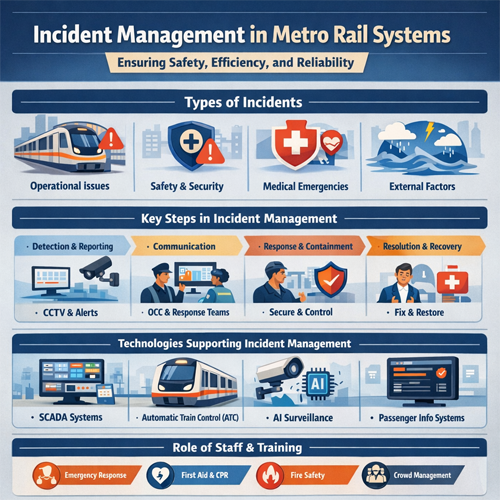
Types of Incidents in Metro Rail
Metro rail incidents can broadly be classified into the following categories:
1. Operational Incidents
- Train delays or breakdowns
- Signal failures
- Track obstructions
2. Technical Incidents
- Power supply disruptions
- Communication system failures
- Rolling stock malfunctions
3. Safety and Security Incidents
- Passenger accidents (e.g., falls, entrapment)
- Fire or smoke events
- Suspicious objects or security threats
4. Medical Emergencies
- Passenger illness or injury
- Cardiac arrest cases
5. External Factors
- Natural disasters (floods, earthquakes)
- Trespassing or vandalism
Key Components of Incident Management
1. Detection and Reporting
Incidents are detected through:
- Automated monitoring systems
- CCTV surveillance
- Staff reports
- Passenger alerts
Timely reporting is essential for quick response.
2. Communication
Clear and rapid communication ensures coordination between:
- Operations Control Center (OCC)
- Station staff
- Train operators
- Emergency services
Passenger communication (announcements, mobile apps, display boards) is equally important to avoid panic and confusion.
3. Response and Containment
Once an incident is identified:
- Immediate actions are taken to secure the area
- Affected services may be halted or rerouted
- Emergency protocols are activated
The focus is on preventing escalation.
4. Resolution and Recovery
- Technical teams fix the issue
- Services are gradually restored
- Safety checks are conducted before resuming operations
5. Documentation and Analysis
Every incident is recorded and analyzed to:
- Identify root causes
- Improve systems and processes
- Prevent recurrence
Technologies Supporting Incident Management
Modern metro systems rely heavily on technology:
- SCADA systems for power and equipment monitoring
- Automatic Train Control (ATC) for operational safety
- Integrated Command Centers for centralized decision-making
- AI-based surveillance for detecting unusual activities
- Passenger information systems for real-time updates
Role of Staff and Training
Human response plays a crucial role in incident management. Staff are trained in:
- Emergency evacuation procedures
- First aid and CPR
- Fire safety protocols
- Crowd management
Regular mock drills and simulations ensure preparedness.
Challenges in Incident Management
Despite advanced systems, challenges remain:
- High passenger density during peak hours
- Coordinating multiple agencies
- Managing public communication effectively
- Ensuring quick decision-making under pressure
Best Practices
- Develop a standard operating procedure (SOP) for all incident types
- Conduct regular emergency drills
- Use real-time data and analytics for decision-making
- Maintain redundancy in critical systems
- Ensure transparent communication with passengers
Conclusion
Incident management is a vital component of metro rail operations. A well-structured system not only ensures safety but also enhances reliability and passenger confidence. As cities continue to grow and depend more on metro systems, investing in robust incident management frameworks will remain a top priority.
Efficient incident management is not just about responding to problems—it's about anticipating them, minimizing their impact, and continuously improving the system for the future.
17 JAN,2025